
Ageing with dignity: reflections from Dénia on the International Day for Older Persons
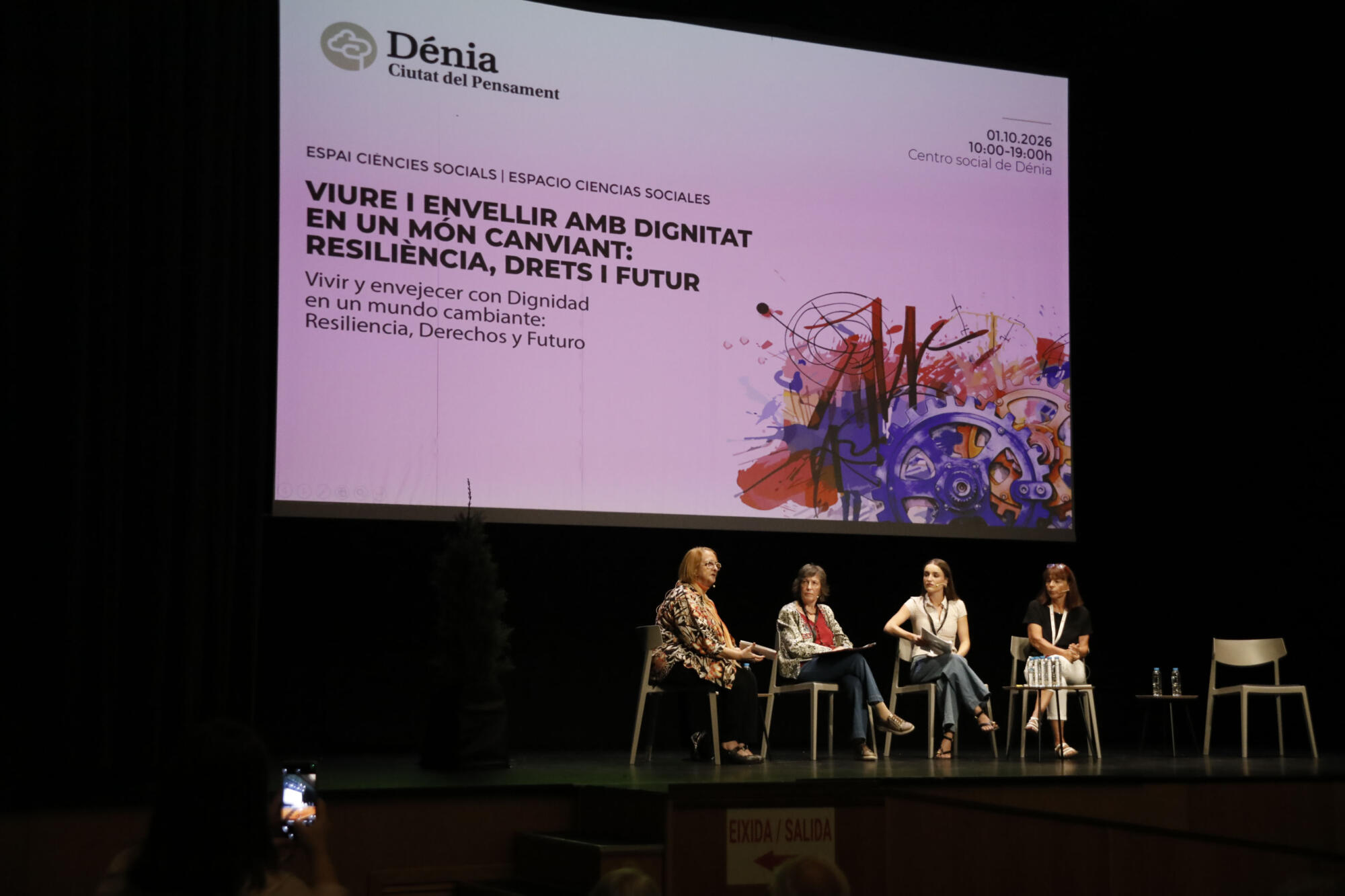
On the International Day for Older Persons, EUWMA attended Dénia’s conference on living and ageing with dignity. Here are the ideas that stayed with us on autonomy, participation, care, loneliness and continuing to learn and grow in later life.
On 1 October, the International Day for Older Persons, Kathleen Misson and Mihaela Bidea attended Vivir y envejecer con Dignidad en un mundo cambiante: Resiliencia, Derechos y Futuro (Living and Ageing with Dignity in a Changing World: Resilience, Rights and the Future) at the Centro Social de Dénia. The day was organised by Fundació Creativa Dénia, with the programme directed and coordinated by Dénia Town Hall, and was opened and closed by Marta Gascó, Councillor for Older People. Researchers, health and care professionals, volunteers and members of the public spent the day on one central question: how can longer lives be lived with dignity, autonomy and a continued place in society?
What we took away
Dignity, as the speakers described it, means keeping a voice in your own life, including when you need care. Participation only means something if people are listened to, and support has to reach those who are isolated or unable to attend. Older people’s contributions, through work, caring, volunteering, teaching and family memory, deserve recognition, without anyone having to stay constantly busy or productive to earn respect.
Many of these themes run through EUWMA’s own work in the Marina Alta, and we are grateful to the organisers for a thoughtful and generous day.
Age is not who you are
Rosa Roig, a researcher in ageing, public policy and care, opened the day by challenging the idea that a person’s age tells us who they are. People of the same age can differ enormously in health, resources, relationships and ambitions, and the label “older people” can hide decades of difference.
She described longer lives as a collective achievement, the result of better health, living conditions and social protection, and said the task now is to make those extra years good ones. Her central point was about autonomy. Needing help with something does not remove a person’s right to decide about it, and families, professionals and institutions should make decisions with older people rather than for them. She also questioned what we mean by resilience. It need not mean coping with everything alone; it can mean finding a different way forward, recognising limits and accepting support.
Designing with older people, not for them
The first round table looked at technology, health, climate and caring cities. Speakers pointed out that older people have adapted to enormous change throughout their lives, and that difficulty with a digital service often reflects poor design rather than an inability to learn. Technology can support communication, independence and the early detection of health problems, but consent, privacy and control must stay with the person using it. The panel also stressed prevention, including strength exercise as well as walking, and raised an uncomfortable question: the people who most need support are often the ones who never come to events like this one.
Having a real voice
The session on participation asked what it takes for older people to have genuine influence. Ángeles Tortosa Chuliá challenged the description of older people as an economic burden, pointing to their family, voluntary, social and economic contributions. Rosa Marín described how a health programme changed once professionals began listening to participants about pain, anxiety and family life rather than focusing only on medical indicators. Ariane Tritten spoke about her committee work with Cruz Roja as a source of learning, companionship and exchange with younger colleagues.
Barriers came up again and again: complicated online procedures, lack of information, disability, isolation and age stereotypes. The panel agreed that consultation is disappointing when people are asked for their views and nothing changes, and that it often works best to start with small groups and build trust. A clear distinction was also drawn between chosen solitude and unwanted loneliness.
Caring for ourselves and receiving care
The afternoon turned to health, wellbeing and care. José Viña emphasised that frailty can be prevented and even reversed, with exercise, nutrition, sleep and social and mental activity all playing a part. Irene Portilla Tamarit spoke about the emotional side of later life, when retirement, bereavement and reduced mobility can affect identity and confidence, and urged that changes in mood or signs of depression should never be dismissed as simply part of getting older.
Javier García Medina noted that staying at home is about more than an adapted house; people also need accessible surroundings, services and neighbours, or home can become isolating. Alfredo Moreno spoke about community nursing, support for carers and the value of ordinary companionship. Local shops, friends, pets and regular activities were all mentioned as everyday sources of belonging.
Continuing to grow
The final round table explored learning, retirement and purpose. Jaume Tortosa Amor described how returning to study through UNED Sénior brings routine, friendship and curiosity, and how teachers learn from their students’ memories too. Juan Carlos Arancibia explained that retirement can feel like freedom to one person and a serious loss to another, and that small responsibilities, interests or volunteering can help people find their direction again. María Sevillano spoke about volunteering with people experiencing homelessness, and added an important note of balance: later life should not become yet another demand to achieve something impressive. Simply living one’s own life, and being engaged in it, can be enough.
A manifesto for dignity in ageing
The day closed with a manifesto that treated longevity as an achievement society must adapt to. Its themes were accessible cities and services, full citizenship and an end to age discrimination, good-quality health care that respects individual choices, digital inclusion, continued access to learning and culture, and cooperation between generations. Dénia committed to becoming a more inclusive, accessible and age-friendly town.
Would you like to reply? You can do so in our Facebook group, where Facebook will ask you to join the group first, or write to us at president@euwmarinaalta.org.