
Planning ahead: what we learnt at the British Consulate’s workshop in Alicante
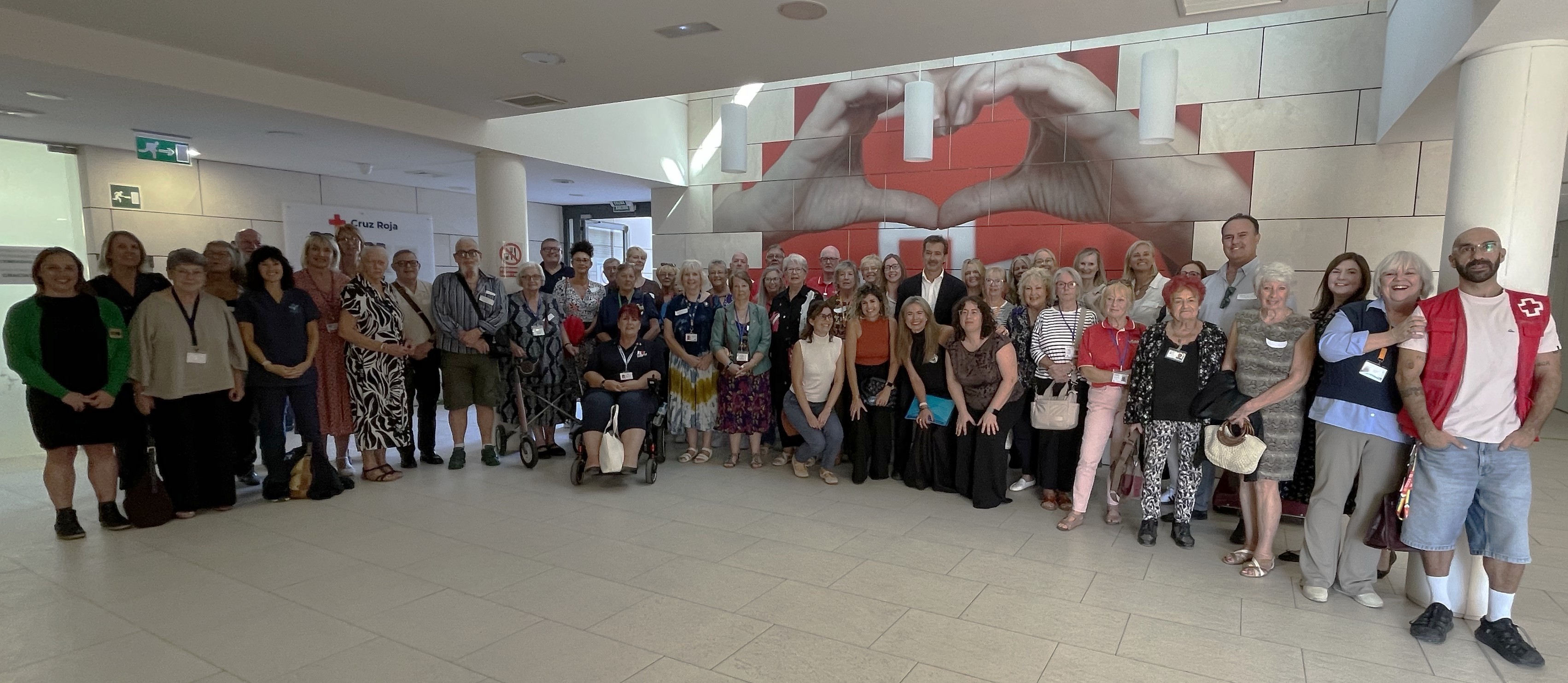
EUWMA joined the British Consulate, Cruz Roja and partners in Alicante to look at how we can better protect older people in vulnerable situations. Here is what we learnt about planning ahead, finding the right help, the consulate’s new guide, and registering to vote in next year’s municipal elections.
Link to the comprehensive gov.uk guide: Planning for later life as a British person in Spain
On 27 October, EUWMA joined associations, town hall representatives and social services professionals at the Cruz Roja provincial headquarters in Alicante for a workshop organised by the British Consulate and its partners. The morning focused on how we can better protect older people who find themselves in vulnerable situations, and how the organisations supporting them can work together more effectively. It was good to see so many familiar faces from across the province, and to hear directly from the people who deal with these cases every day.
Plan while you still can
Esther Jorquera Egea, who leads the team of judicial defenders (defensores judiciales) at the regional government’s territorial office in Alicante, explained how Spanish law protects adults who can no longer manage their own affairs. The current legislation puts the person’s own wishes at the centre, with support measures tailored to each individual and a strong emphasis on helping people continue to live independently in their community rather than going into residential care.
Her message was clear. Many British people move here in their fifties or when they retire, and the time to put things in order is before illness or cognitive decline sets in. In Spain, arrangements made before a notary carry more weight than a later court decision, and a judge will only step in where nothing has been arranged. The notary registers these documents with the Civil Registry, and the court must check for them before making any decision. The main options are:
- Autocuratela, naming the person you would like to act as your guardian in future
- Poderes preventivos, a preventive power of attorney, which can be as broad or as specific as you need
- A will, also made before a notary
Where nobody has been named and no family member can step in, the regional public guardianship body takes over the management of the person’s money and property. In 2025 it was responsible for more than 5,000 people.
You can also record a living will (voluntades anticipadas). This is free if you arrange it through the social worker at your health centre or hospital, ideally after speaking to a doctor, and it is registered across the Comunitat Valenciana. It can also be done before a notary, for a fee.
Finding the right help
The consular team spoke about matching each problem to the right service. A health problem needs a doctor; someone who cannot feed themselves has a social need rather than a medical one, so an ambulance is not the answer. Financial difficulties and residency paperwork are dealt with by different offices again. Social services are not obliged to carry out an assessment, resources vary from one town to the next and change over time, and the dependency assessment can take up to two years. It will be carried out in Spanish, so it is wise to bring an interpreter.
Two principles came up again and again. Everyone is presumed to have capacity until a professional decides otherwise, and nothing can be done without the person’s consent unless the matter reaches the courts because their life is at risk. People are entitled to make decisions that others consider unwise. Spanish law also expects families to support their relatives, which is why the authorities will always try to contact family members, even those living abroad.
A new guide, and a request for our help
Kirsten Garry, a national consular officer for Spain, presented the consulate’s guide for older British people planning their future in Spain, which is available on GOV.UK. It grew out of an analysis of welfare cases from 2024 and 2025, which showed a rise in serious and complex cases among the over-60s. Alicante has the highest number of these cases in Spain, followed by Málaga.
The guide covers choosing where to live, healthcare, social services and dependency support, pensions and tax, wills and funeral plans, and returning to the UK. A weekly campaign based on it is running on the Brits in Spain Facebook page for the next couple of months, and the consulate asked every association present to share it as widely as possible, with British residents and with social workers, health centres and hospitals too.
A few practical points worth passing on:
- Return life certificates promptly, or your pension or S1 healthcare cover may be stopped, and keep the DWP and the International Pension Centre informed of any change of address.
- If you were living in Spain before 1 January 2021, you may be able to claim Attendance Allowance from the UK.
- Complete the emergency contact page in your passport.
- Make sure someone knows about your funeral plan and how to find it.
- Check that your health centre has your postal address as well as your home address, so that letters about appointments and operations reach you.
Municipal elections: register between 1 December and 15 January
British residents must register again before every municipal election, even if they voted last time. For the elections in May 2027, the registration window runs from 1 December 2026 to 15 January 2027. You need to be on your town hall’s padrón and to have been resident in Spain for at least three years.
Every British resident on the padrón should receive a letter from the INE (Instituto Nacional de Estadística) with a code to register online. If you have a digital certificate or Cl@ve, you can register online from 1 December without waiting for the letter, and you can later check your registration and find your polling station. Alternatively, you can fill in a paper form and hand it in at your town hall. If your letter has not arrived by early January, the paper form is the safest option. Appointments for Cl@ve can be booked at any SUMA office in the province.
Our thanks to the British Consulate for organising the morning and to Cruz Roja for hosting us.
Would you like to reply? You can do so in our Facebook group, where Facebook will ask you to join the group first, or write to us at president@euwmarinaalta.org.